Public sector
Critical infrastructure inspection
Unmanned vehicles inspect tunnels, ports and power grids autonomously, with no human operator in the loop.
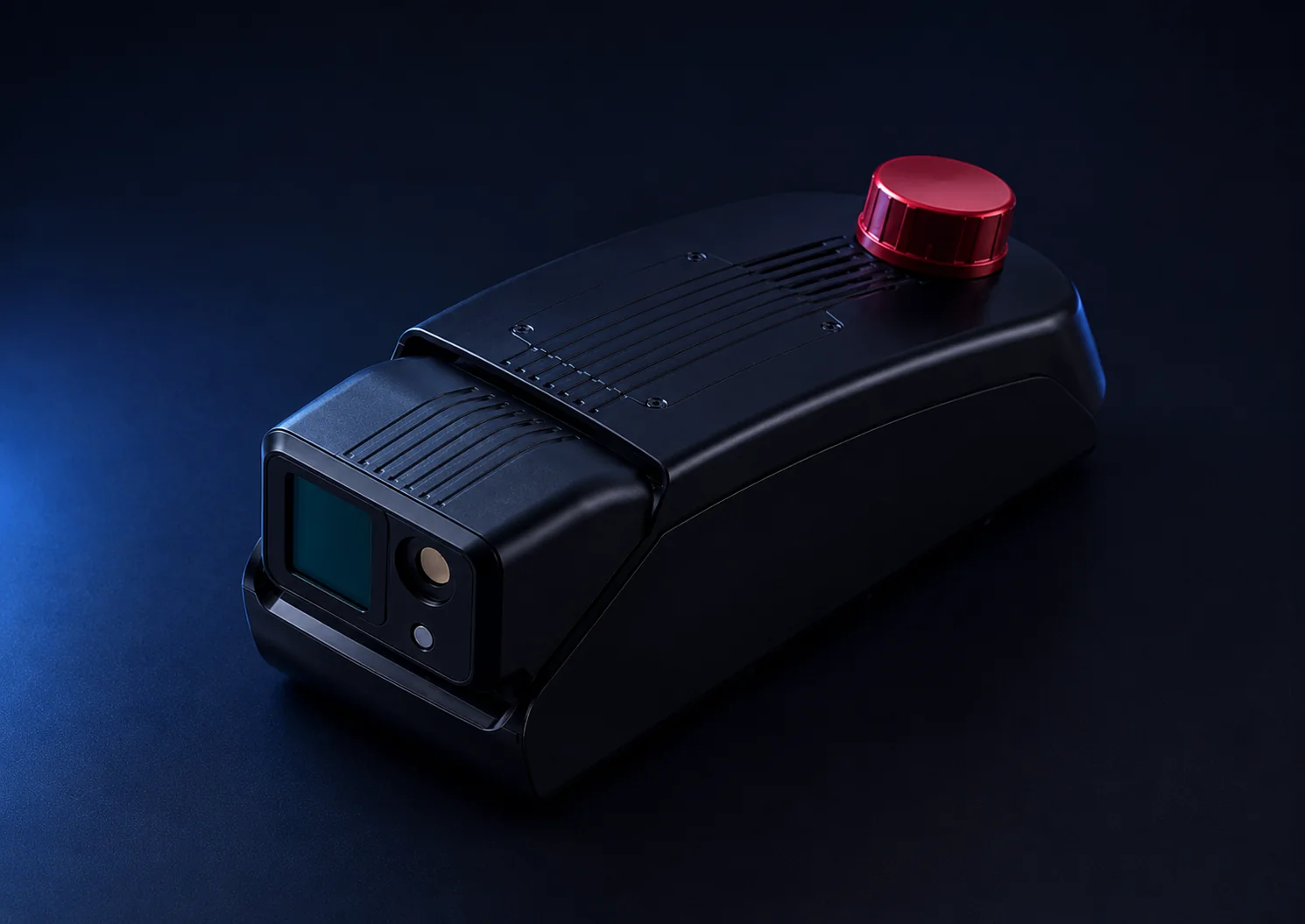
PAI‑X · Physical AI Innovation
One drop‑in module fuses 3D LiDAR, IMU, optical and thermal sensing onboard, so standard vehicles, robots and drones can work on their own in any condition.
PAI‑Lynx · First commercial availability, December 2026
Register interestPhysical AI in one housing
PAI‑Lynx turns passive mobility and robots into autonomous Physical AI. It builds an N‑dimensional fusion map in real time, rich enough to give any vehicle or robot full autonomy in any operating condition.
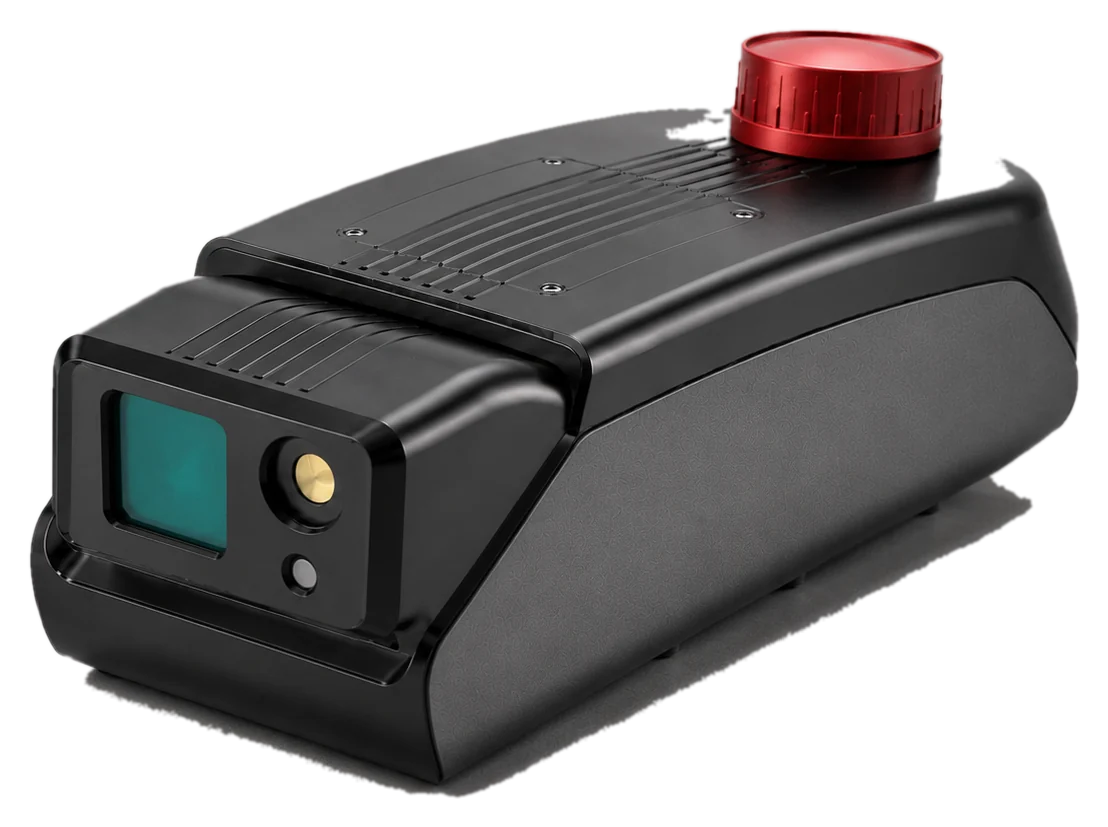
Reliability is scored live, inside the estimator. Enter smoke and optical weight drops while thermal and LiDAR take precedence, so spatial density holds where a single sensor would go blind.
Darkness
LiDAR and thermal carry the frame
Smoke
Optical steps back, thermal leads
Dust
Density held across modalities
No GNSS
Relative localisation continues
Put autonomy where people should not have to go, and where conditions change faster than an operator can react.
Public sector
Unmanned vehicles inspect tunnels, ports and power grids autonomously, with no human operator in the loop.
Industry
Conventional material‑handling platforms become self‑operating Physical AI units, cutting labour cost and raising throughput.
Defence & response
Resilient autonomous operation in smoke, darkness and GPS‑denied environments for defence and emergency response teams.
Tell us what you operate and the conditions it has to survive. We will walk you through integration.
Company

PAI‑X builds the bridge between basic robotics and true Physical AI. Our modules turn standard mobility platforms into mission‑ready autonomous systems.
Physical AI
From nothing, something
Pie
Cross & eXpansion
Enter the market for autonomous inspection of power and fire‑safety installations.
Supply the perception module to indoor and outdoor autonomous mobile robots.
Expand into self‑driving and self‑flying vehicles and UAV autonomy platforms.
Products
One fusion core, built into the systems that need to see in any condition.
Perception module · Dec 2026
The all‑in‑one fusion module that turns passive mobility and robots into autonomous Physical AI.
Learn moreFire safety · Vertical type
Travels up and down a vertical rail to watch, locate and respond to fire across height.
Learn moreFire safety · Horizontal type
Travels along a horizontal rail to watch, locate and respond to fire across length.
Learn moreTell us the site or platform and the conditions it faces. We will recommend a configuration.
Full sensor suite, high‑performance edge computer and dynamic fusion software, consolidated in one compact all‑in‑one housing. Available December 2026.
Custom sensor geometry, hardware‑level time synchronisation and dynamic extrinsic calibration bring every stream into a single frame, so geometry, appearance, motion and heat all describe the identical instant.
Reliability is scored continuously from geometric consistency and feature richness, inside the tightly coupled estimator rather than as pre‑filtering. Enter smoke and optical weight drops while thermal and LiDAR take precedence.
The platform receives a single ROS‑compatible spatial output straight into its motion controller. No external compute, no sensor expertise, no platform redesign.
Turns passive ground and aerial platforms into self‑navigating autonomous agents without system redesign.
3D metric geometry, visual appearance, thermal signature and vehicle pose combined into one actionable frame.
Zero‑modality‑failure architecture holds spatial density even when darkness, smoke or dust disables individual sensors.
Continuous relative localisation indoors, underground and in jammed environments where satellite signals fail.
Maps heat anomalies such as fires, overheating assets and hidden personnel directly in 3D space rather than flat 2D imagery.
Sensing, dynamic fusion and mapping all processed locally, for zero‑latency intelligence with no cloud dependency.
We will walk you through integration and the fusion output your motion controller receives.
An autonomous fire watch built on PAI‑Lynx sensing. It travels its rail, finds fire and smoke on its own, locates the source in 3D and responds, in two types: vertical‑travel and horizontal‑travel.
Optical object detection and thermal imaging run together, so a flame or a plume of smoke is picked out even where one view alone is unsure.
LiDAR, optical and thermal streams are fused into one 3D map, so the source is located in space rather than as a hot spot in a flat image.
The system moves along its rail toward the fire and directs suppression at the located source, while raising the alarm.
Travels up and down a vertical rail, covering the full height of a space from a single footprint.
For tall spaces · high‑bay racking · atriums · shafts
Travels along a horizontal rail, patrolling the length of a long space so one unit watches what would otherwise need many fixed detectors.
For long spaces · corridors · tunnels · cable trays
The same fusion core that lets vehicles and robots work in darkness and smoke. Thermal leads when smoke blinds the camera, and LiDAR keeps the geometry, so the system keeps watching when conditions are at their worst.
Tell us the space and what it stores. We will recommend the type and layout.
Contact
Tell us what you operate and the conditions it has to survive. We will walk you through integration and the fusion output your motion controller receives.